Google Business Profile for Dentists
Learn how dentists can maintain a Google Business Profile that supports local discovery, patient trust, accurate listings, and measurable bookings.
TL;DR: For many dental practices, the Google Business Profile is the first page a prospective patient sees. Treat it as a maintained local storefront: verify ownership, keep core facts accurate, explain services clearly, add real photos, answer reviews, and measure calls and website actions. It complements, not replaces, a useful, conversion-ready website.
Why your Google Business Profile for dentists needs operating attention
A website is an owned destination. A Google Business Profile (GBP) is the practice’s public-facing record across Google Search and Maps. It can put the office name, hours, phone number, directions, reviews, photos, services, and booking path in front of someone who has not yet decided which result to open.
Google’s local-ranking guidance says local results are mainly shaped by relevance, distance, and prominence. Google also says there is no way to request or pay for a better local ranking. That distinction matters: maintaining a complete profile improves the information Google can use and the experience patients receive, but it is not a promise of a particular position.
If your profile appears in a prospective patient’s decision path, it deserves the same editorial care as your website.
What to maintain first
1. Establish one accurate source of truth
Verify the profile and make sure the real-world practice name, address, phone number, hours, and website agree. Google’s representation guidelines say the business name should reflect how the business is represented in the real world. Adding service keywords or location stuffing to the name can create policy and suspension risk.
For a multi-location practice, create a location-level checklist. Confirm suite and map-pin details, holiday hours, the phone number that reaches that office, and the page that represents that location. Never create duplicate profiles simply to cover nearby neighborhoods.
2. Make the primary category defensible
Choose the most specific category that describes what the business is, not every service it offers. Use additional categories only when they genuinely represent the practice. A cosmetic service is not automatically a reason to replace the core dentist category, and categories are not a keyword field.
Record the date and reason for any category change. If visibility changes, you want an audit trail rather than a sequence of guesses.
3. Build a service narrative that matches the site
The profile’s services should reflect treatments actually offered. Use plain-language descriptions that match the corresponding website pages. A patient searching for implants, emergency care, or clear aligners should find an understandable next step, not a list copied from a vendor.
This is where GBP and the website should work together. The profile captures local intent; a dedicated service page answers the deeper questions about candidacy, process, risks, financing, and booking. WeCapture’s website development service builds service and location pages into a coherent, mobile-first site structure rather than hiding every treatment under one generic Services page.
The profile operating rhythm
A profile is not a one-time setup project. Use a lightweight owner-and-reviewer workflow:
| Area | Weekly or monthly check | Evidence to retain |
|---|---|---|
| Facts | Hours, phone, URL, address, booking path | Change log and screenshot |
| Services | New, paused, or renamed treatments | Approved service list |
| Photos | Recent real office, team, and experience images | Asset date and consent record |
| Reviews | Response coverage and recurring themes | Response queue and theme notes |
| Questions | Accuracy and unanswered questions | Answer owner and date |
| Measurement | Calls, direction requests, website actions | Period-over-period report |
A monthly review is a minimum for an established office; a new location or active campaign may need weekly checks. The cadence is a management choice, not a Google ranking guarantee.
Use evidence patients can recognize
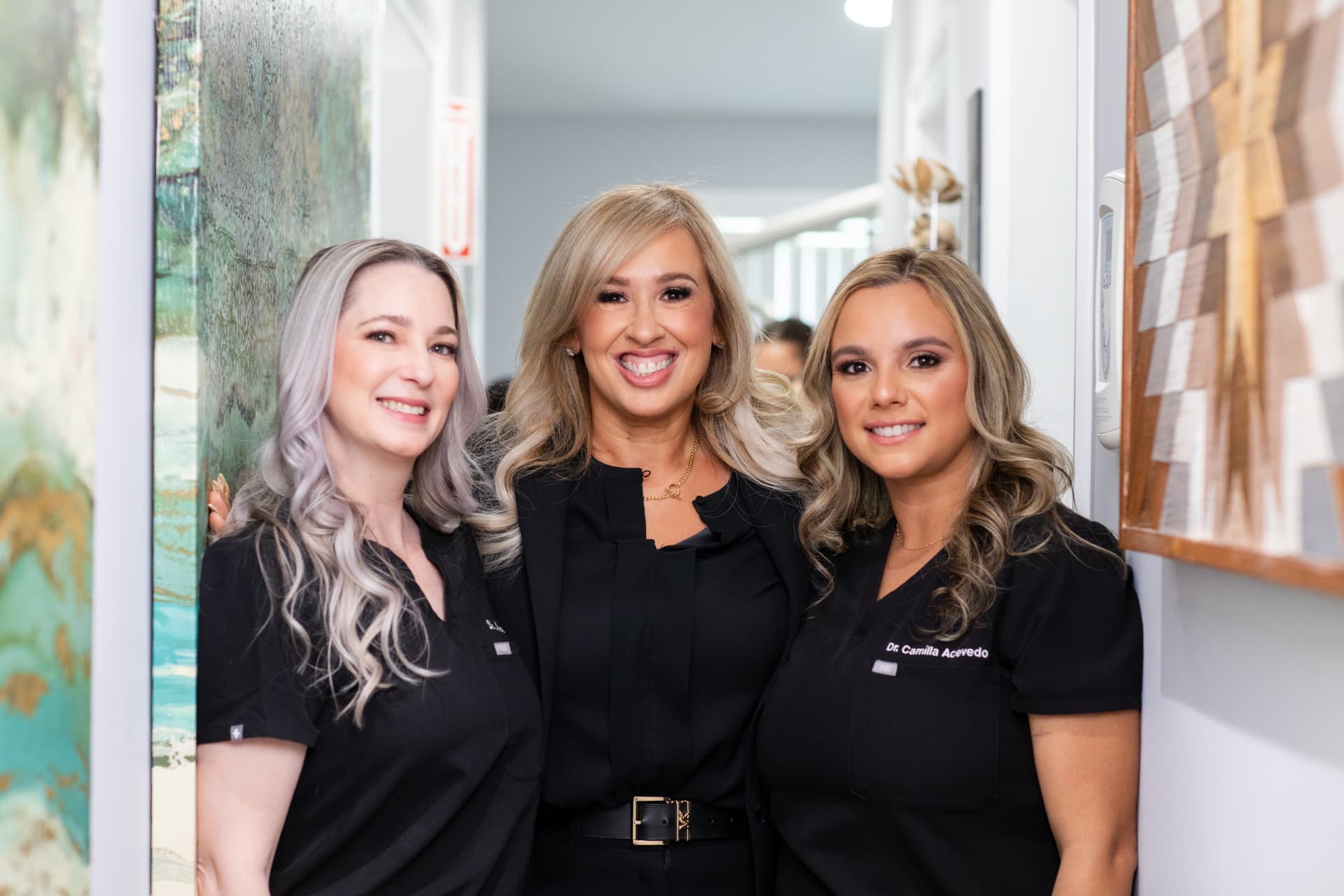
A clean operatory, accessible entrance, front desk, team, signage, and doctor introduction answer practical anxiety before the first call. Do not publish patient images or treatment details without appropriate permission. Do not imply outcomes that the image cannot support.
Real media also creates reusable assets. WeCapture’s Media & Content service captures brand photography, doctor and team video, office tours, patient stories with releases, and short-form content that can be adapted for the profile and the rest of the funnel.
Treat reviews as conversations, not a ranking lever
Ask every eligible patient for honest feedback through a compliant process. Do not buy reviews, write them for patients, or promise a positive rating. Respond without confirming that a reviewer was a patient or revealing protected information. A safe response acknowledges the concern, invites private contact through an appropriate channel, and stays general.
Google’s local guidance says positive ratings and helpful replies can help a business stand out. It does not guarantee that a particular review count or response rate will produce a position. Read review themes as operating feedback: wait times, communication, billing confusion, and what patients value.
WeCapture’s Reputation Systems service describes automated requests, a sentiment safeguard, review responses, and reporting. Any practice using a similar workflow should confirm consent, message content, platform policy, and the human escalation path.
How to connect GBP activity to booked care
The profile is useful only when the next step works. Test the phone number from a mobile device. Test the booking link. Ask a new patient what they saw before calling. Ensure the landing page loads quickly, states the location and service, and gives a clear route to contact the office.
Track profile interactions as directional signals, then reconcile them with calls, forms, scheduled appointments, attended appointments, and treatment value. A profile action is not a patient, and a patient is not necessarily production. The practice’s PMS and call-handling process supply the business answer.
For paid demand, keep the measurement chain intact. WeCapture’s Paid Acquisition service includes call and form tracking, CRM piping, and reporting against cost per new patient and case type, not clicks alone. The same discipline should apply to organic local activity.
A 30-day GBP reset for a dental practice
- 1.Days 1-3: verify. Confirm ownership, remove duplicates, check the real-world name, address, phone, hours, website, and map pin.
- 2.Days 4-7: clarify. Review primary and secondary categories, services, attributes, description, booking link, and location page.
- 3.Week 2: document. Build a photo list, approved response principles, question owner, and holiday-hours process.
- 4.Week 3: connect. Test phone and booking paths; align the profile with service pages, directory listings, and call tracking.
- 5.Week 4: measure. Establish a baseline for profile actions and downstream booked care, then schedule monthly review.
The unique advantage is not a secret field. It is a maintained system where facts, services, media, reputation, website, and follow-up agree. That is how you stop treating the profile as a neglected citation and start treating it as part of the front door.
Next step: If your listing data is scattered across locations and directories, see WeCapture’s Listings & Presence service for a documented audit, correction, optimization, and maintenance process.
FAQs
Is a Google Business Profile more important than a dental website?
Neither replaces the other. The profile helps people discover and evaluate a location in Search and Maps, while the website provides the detailed service, trust, accessibility, and booking experience that the profile cannot.
Can I add keywords to my dental practice name?
Only if they are part of the real-world name used consistently on signage and business materials. Google’s guidelines prohibit unnecessary service or location information in the name, and keyword stuffing can create suspension risk.
How often should a dental practice update its profile?
Check facts and booking paths at least monthly, and whenever hours, services, providers, or locations change. A new office or active campaign may warrant weekly checks. Frequency alone is not a ranking guarantee.
Do Google reviews guarantee Map Pack rankings?
No. Google identifies relevance, distance, and prominence as major local factors, and says there is no way to pay for a better local ranking. Reviews and helpful replies can support trust and prominence, but no review target guarantees a position.
A practical next step
Start with an audit that a practice owner can verify: one source of truth for every location, one owner for changes, and one monthly report connecting profile actions to real inquiries. WeCapture can help map that system across listings, reputation, website, content, and acquisition.
Talk with WeCapture Dental about your growth system.
Ready to put this to work in your practice?
Book a Free Strategy Call